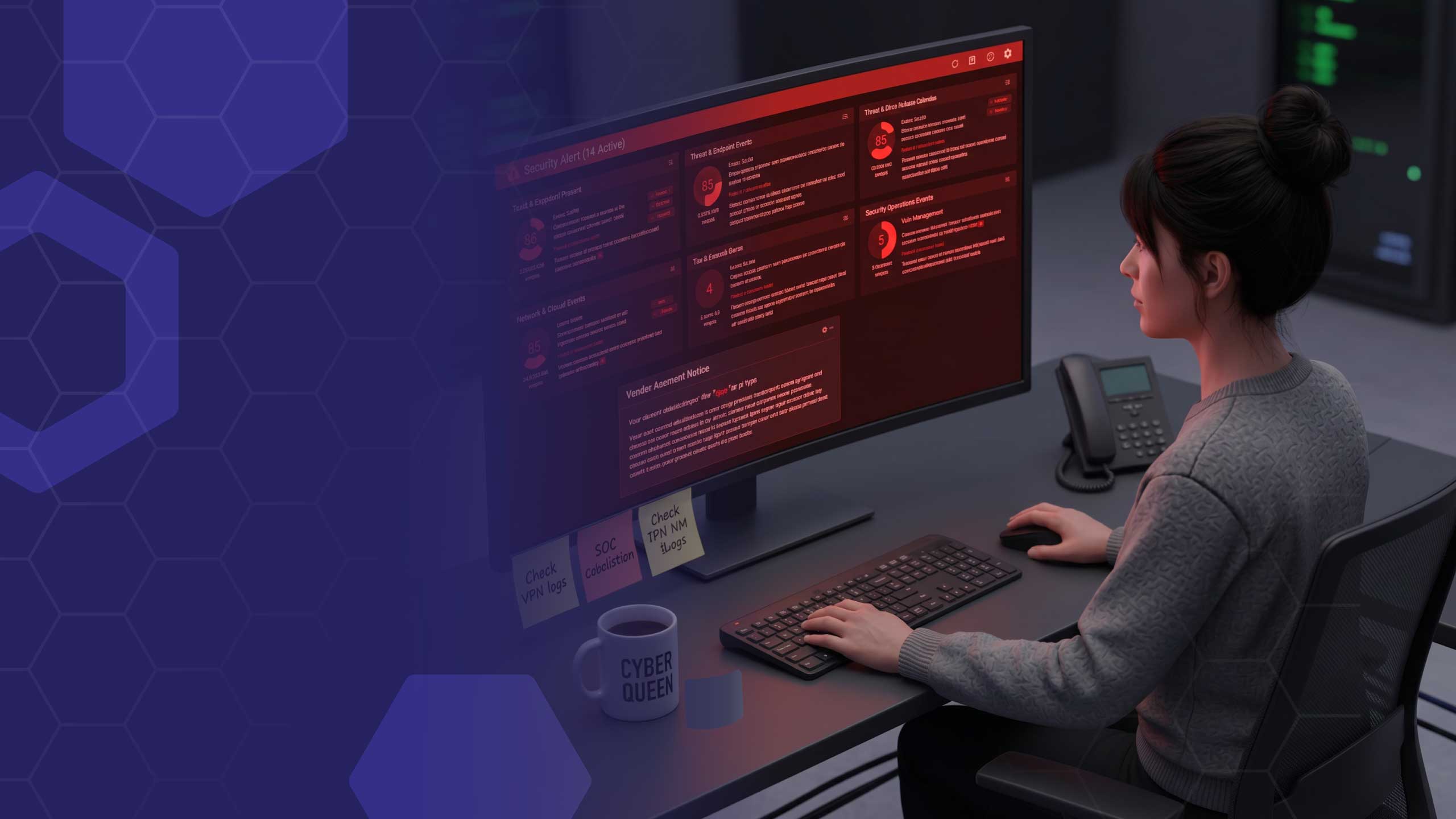
Three alerts. One attack. No system saw the whole picture.
It didn’t look like a cybersecurity attack. At least not at first. Instead, it looked like three separate and manageable events: An email alert, an endpoint issue, and a cloud login anomaly.
Each event was detected and handled individually. That was the problem. The tools generated alerts, but none of them shared the context needed for the team to understand the attack as a single coordinate sequence.
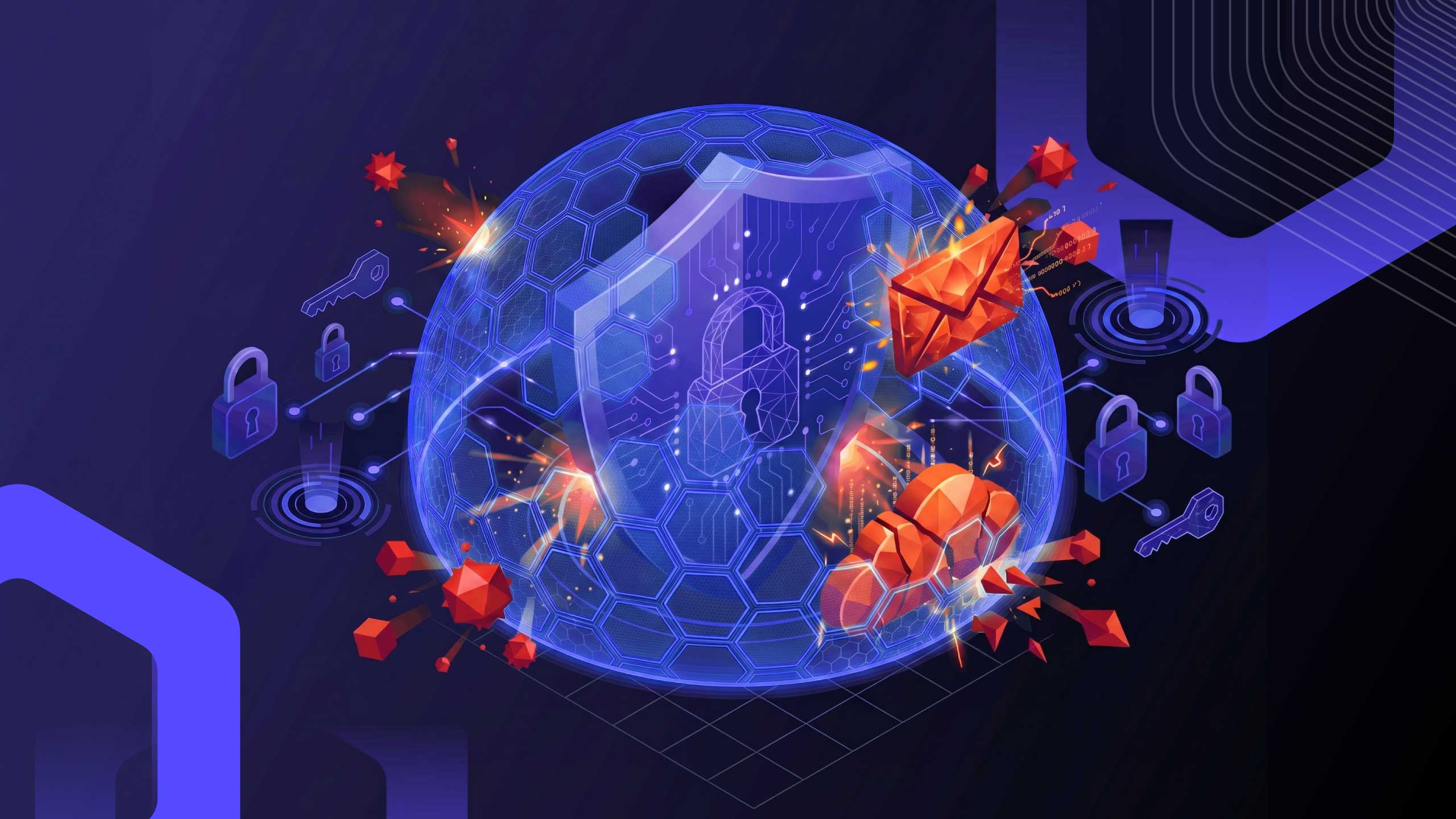
That’s because ideally, security shouldn’t just detect and respond to isolated events. A true platform should connect signals across the environment, surface the bigger picture to human operators, and automate the operational work that slows teams down.
Here’s how the event played out in three stages:
Stage 1: The Entry Point
It started with a typical phishing email. Nothing unusual on the surface. The email security tool flagged it as suspicious. It was quarantined, logged, and then closed.
From the IT system’s perspective, the threat was handled and the case was resolved, but resolving an alert is not the same as understanding the broader attack path.
In reality, the attacker didn’t need that particular email to succeed. They just needed a single interaction, such as one click, one credential, or one moment of access.
That part of the phishing attempt wasn’t visible to the security tool.
Stage 2: The Endpoint Alert
Hours later, a separate alert was triggered. An endpoint detection tool flagged unusual activity on a user’s device. A process running didn’t match known patterns, which signaled a possible compromise.
The alert was investigated and contained. From that system’s perspective, it was a new, unrelated incident. There was no shared context between tools, and no indication that this was part of something larger or coordinated. Each system operated independently, requiring IT teams to manually connect events across disconnected dashboards and workflows to spot the pattern.
The activity was seen as just another issue, handled in isolation.
Stage 3: The Cloud Access
Later still, there’s yet another signal, triggered by a login from an unfamiliar location. A cloud application accessed the company network at an unusual time. Valid user credentials were used in a way that deviated from normal patterns, raising suspicion.
This issue was also flagged, logged, and reviewed. Again, there was no direct link to the endpoint alert and no visibility into the earlier phishing attempt. It was just seen as a third event.
The organization used three different tools, experienced three alerts, and took three separate responses. In reality, these were not three incidents. It was one attack with a coordinated sequence:
- Initial access through phishing
- Lateral movement via endpoint compromise
- Escalation through cloud access using stolen credentials
Each step is connected, and each step is intentional. The problem is that no single tool could see the full chain of events. Each point solution only understood its own slice of activity, leaving the burden of correlation and interpretation on already stretched teams. Across email, endpoint, cloud, network, and data, each system saw its own signal. None had the full picture.
Fragmented security doesn’t fail to detect threats. It fails to connect them across endpoint, email, network, cloud, and data in a way that gives IT teams and MSPs actionable context.
Three Alerts. Zero Understanding.
Detection tells you something happened. Shared platform intelligence helps teams understand what’s happening across the entire environment.
From a reporting standpoint, everything worked exactly as designed:
- The email tool detected a phishing attempt
- The endpoint tool flagged suspicious behavior
- The cloud system identified an anomalous login
Each tool did its job, yet none of them answered the question that mattered, “What is actually happening right now?” The issue wasn’t a lack of alerts. It was a lack of unified visibility and operational context.
Instead of one coordinated attack, the organization saw three isolated events. Rather than a single, escalating threat, it saw disconnected alerts. And instead of stopping the attack early, the IT team responded to symptoms as they appeared.
Why the Visibility Gap Introduces Risk
The inability to connect the activities was not a detection problem. It was a visibility problem.
Many security stacks are built using effective tools. Each one is optimized for a specific area, but the technology capabilities for that area come at the cost of shared context.
Different systems use different policies and now more than ever use different AI models, with each one analyzing its own slice of the security environment. That fragmentation limits what individual AI systems can actually understand, and prevents teams from seeing coordinated threats early enough to act confidently.
AI amplifies this issue. Its effectiveness depends on the completeness of the context it can access. That means when siloed tools are being used, context is fragmented by design.
Even as detection improves, understanding attacks does not. The result is more alerts for internal IT teams to investigate manually and more operational complexity for MSPs managing multiple customer environments instead of fewer, better-informed decisions.
Why Fragmented Models Break at AI Speed
In slow moving IT environments, using fragmented tools was still manageable. Teams had time to correlate alerts manually, investigate patterns, and connect the dots after an attack. Today, attacks are exponentially accelerated, and security teams and MSPs need platforms that automate correlation and reduce operational burden while allowing automation to handle repetitive operational work so human teams can focus on higher-value decisions.
That time is gone. AI-driven attacks move fast, so the window between an alert and impact is shrinking. By the time separate incidents are reviewed and correlated, the attack has already progressed. What looks like three manageable issues is really one coordinated attack.
Move From a Fragmented Approach to One Investigative Experience
The visibility gap isn’t solved by adding another security product. It’s solved by giving analysts one place to investigate what they’re already seeing.
With separate security tools, analysts often move between email, endpoint, cloud, and other consoles to understand whether seemingly unrelated events involve the same user, device, or timeframe. Every switch between tools slows the investigation and increases the effort required to build the full picture.
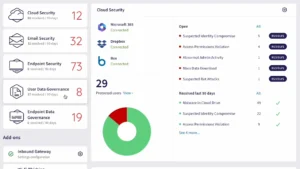
Coro brings those security events into one platform, allowing analysts to investigate related activity from a single interface. Rather than moving between multiple products, they can filter, search, and review events together while remaining in control of how the investigation unfolds.
With this approach:
- Security events are available from one investigation interface
- Analysts can review related activity without moving between separate security tools
- Consistent workflows help investigations move faster while keeping analysts in control
Instead of using three different security products, analysts investigate related security activity from one platform. The investigation still requires human judgment, but removing tool switching helps teams work faster and with greater efficiency.
The Real Problem Is What You Don’t See
Most organizations believe they have visibility because they have alerts, but alerts are fragments. Visibility is understanding and having context. In a fragmented system, understanding takes longer because analysts must assemble the full picture from separate tools.
How Coro Changes Outcomes
Coro changes the investigation experience by reducing operational complexity.
Instead of moving between separate security products to understand related events, analysts investigate security activity from one platform. Email, endpoint, cloud, data, and other security events are available through a consistent interface, allowing teams to focus on understanding what happened instead of navigating disconnected tools.
For Lean IT teams and MSPs, that means:
- One platform for investigating related security events
- Consistent workflows across security domains
- AI-powered automation that reduces repetitive operational work
- Guided response capabilities that help analysts resolve issues more efficiently while remaining in control of every investigation
- Built-in security awareness capabilities that help reduce risk
Rather than reconstructing investigations across multiple security products, analysts work from one platform with the information they need in a single place. They can review related security activity, follow the sequence of events, and make informed decisions without constantly switching tools.
The attack itself hasn’t changed. What changes is the investigation experience. By reducing operational complexity and giving Lean IT teams one platform for security investigations, Coro helps organizations respond faster while keeping analysts in control of every decision.