Moving from fragmented, reactive security to a unified platform approach built for AI-speed threats.
Historically, workspace security operated on a simple premise: detect a threat, respond to it, and recover from it, but AI-driven attacks are compressing timelines faster than fragmented security operations can realistically respond. That model is breaking down as threats become more targeted, frequent and sophisticated.
AI-driven attacks have fundamentally changed the speed and scale of threats. What used to unfold over days or weeks now happens in hours or even minutes. By the time an alert is triggered, the damage is done. The window for response has compressed to near real time. But what about our ability to meet that need?
This shift exposes a hard truth: most security architectures are built for a slower moving world where teams had more time to investigate alerts, correlate signals across tools, and manually respond before exposure escalated. That world is gone.
The Limits of Best-of-Breed Security
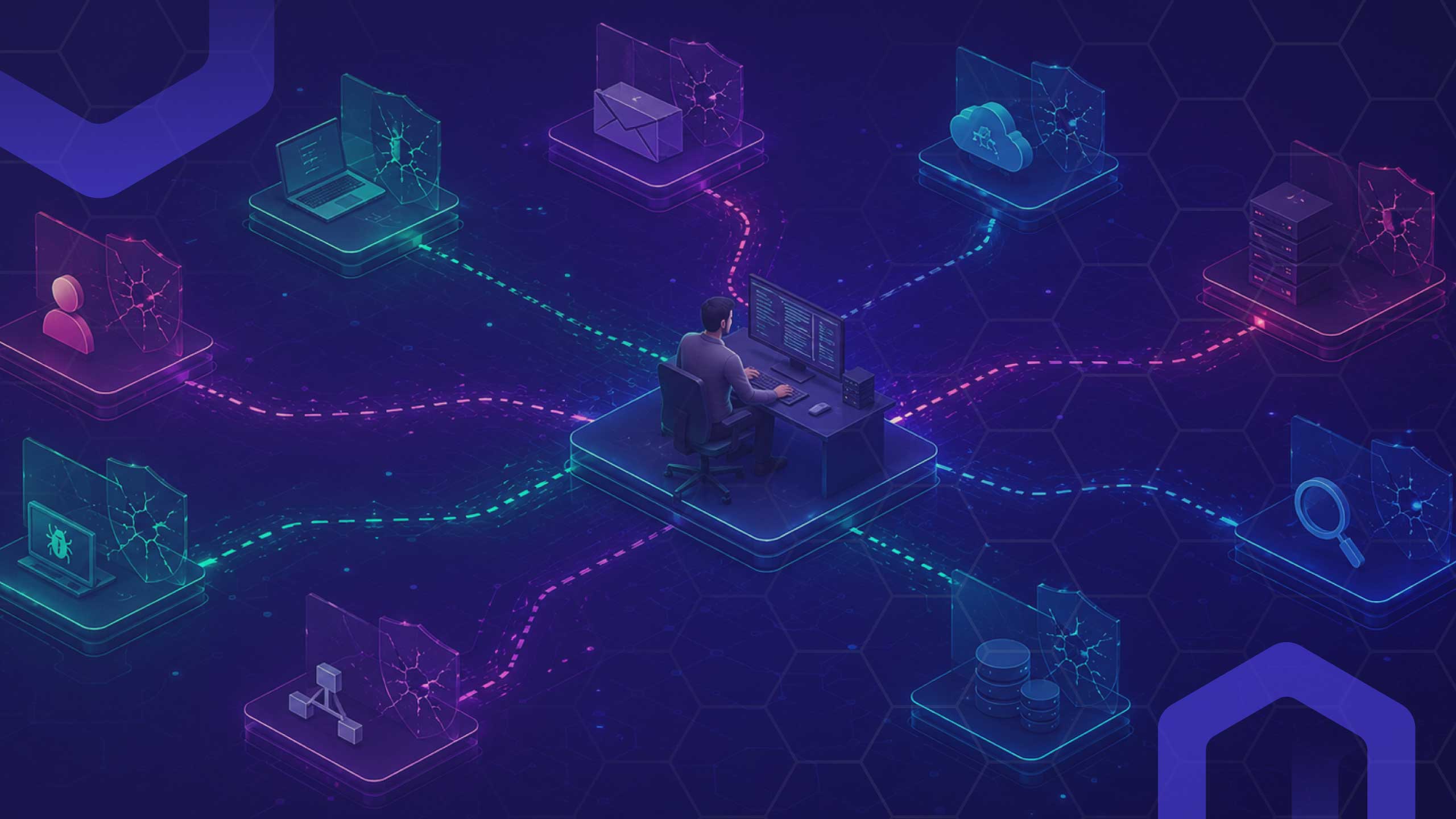
Best-of-breed tools were designed to provide protection in specific areas of the workspace, such as endpoints, emails, networks, or the cloud. In theory, they represent the “best” protection in each category. In practice, they create fragmentation across operations, visibility, and response.
That’s because each tool operates in isolation. They have their own policies, alerts, and increasingly, their own AI model. What they don’t share is context. Each tool sees only part of the environment, which limits how effectively their AI can identify patterns, connect signals, and automate meaningful action across the full workspace. One system doesn’t know what another is seeing and doesn’t understand the full environment.
This lack of context creates a structural limitation: AI is only as effective as the context it can access. Layering AI on top of disconnected tools accelerates isolated workflows. It doesn’t bring security operations together in one platform with complete visibility across the environment. In a fragmented workspace security environment, context is incomplete.
The result is predictable:
- Alerts are correlated after the fact
- Policies remain disconnected
- Response is reactive, not preventative
Even with a Security Information and Event Management (SIEM) solution pulling logs together, organizations often still stitch together information after a threat has already occurred.
Why Context Is Critical
In cybersecurity, more tools don’t equal more protection. They often mean more dashboards, more alerts, and less clarity.
A unified cybersecurity platform changes that by creating a shared system of record where signals, policies, and actions are connected. Instead of stitching together disconnected products, teams operate from one platform that gives IT teams complete visibility without juggling multiple products.
The Real Divide: Pre-Event vs. Post-Event Security
Most legacy and best‑of‑breed architectures function mainly in a post‑event, reactive mode. Their point solutions do block and filter threats, but the overall system still identifies what already happened and then asks humans to respond. The challenge is that AI‑speed attacks increasingly move faster than fragmented operations can investigate manually.
Because AI-driven threats move fast, response alone isn’t enough for comprehensive workspace security. Organizations must close exposure gaps before an attack occurs, while still giving IT and security teams visibility, oversight, and control over how threats are handled.
This requires a fundamentally different approach to cybersecurity.
How an AI-Enabled Platform Improves Protection
A unified, AI-driven platform doesn’t just consolidate tools. It creates one operating model across the workspace. It changes how security works. When endpoints, email, cloud, and networks are part of the same system, context becomes continuous instead of fragmented across separate dashboards and disconnected workflows.
Integrated capabilities deliver protection that siloed tools can’t:
- Continuous exposure management. Instead of periodic scans and delayed patching cycles, vulnerabilities are identified and addressed in near real time through automation guided by a unified view of the security environment.
- Connecting policy with context. Security policies are managed from one platform with consistent workflows across each security domain.
- Proactive threat mitigation. The system can identify and close gaps before they’re exploited, reducing manual operational burden while still enabling teams to maintain oversight and control.
This is where AI becomes impactful. It doesn’t just process alerts faster. It helps teams operate more efficiently by reducing noise, automating repetitive remediation tasks, and surfacing what actually requires human judgment. It operates across a unified platform to automate remediation, support consistent policy management within each security domain, and help IT teams focus on the events that require human judgment.
Just as importantly, it does this before an incident escalates.
Where Coro Fits
Coro is a unified, AI-driven cybersecurity platform purpose-built for Lean IT teams and the MSPs that support them. Rather than stitching together disconnected point solutions, Coro brings endpoint, email, cloud, identity, and user protection into one native platform, giving IT teams complete visibility and security without switching between multiple products. It replaces fragmented security tools with a single system that protects endpoints, email, cloud apps, and users, all from one place.
Instead of reacting to alerts across disconnected tools, Coro brings policy, context, and automation together in one platform. The result is fewer handoffs, fewer isolated alerts, and more operational clarity for teams managing increasingly complex environments. Vulnerabilities are identified and addressed before they’re exploited, not after damage is done.
Why This Shift Matters Now
Security teams, especially Lean IT organizations and MSPs managing multiple customer environments, typically operate at capacity. They can’t manually monitor every signal, correlate every alert, or respond in real time – and when they are already running at 100% capacity, they have no buffer to absorb spikes in activity or major incidents that demand extra attention.
In these environments, AI becomes operationally necessary to help teams scale expertise, reduce operational drag, and focus attention where human judgment matters most. For example, AI layered on top of fragmented tools accelerates reactive workflows, while AI embedded within a unified platform enables proactive security.
The expectation for cybersecurity is changing. Organizations are no longer asking, “How quickly can we respond?” They’re now asking, “Why are we still operating across disconnected tools that only tell us what already happened?”
That question defines the next generation of cybersecurity and sets the stage for how threats, exposures, and risks are understood moving forward.
That shift is redefining cybersecurity. The future isn’t more alerts or more disconnected tools. It’s a unified platform that brings security operations and visibility together in one place to help Lean IT teams and MSPs reduce complexity, automate response, and stay ahead of threats moving at AI speed.
About Coro
Coro is a leading workspace cybersecurity platform provider built for Lean IT teams and MSPs. Coro consolidates endpoint, email, cloud, network, identity, and data protection — along with security awareness training — into one unified platform. Driven by a single AI agent and a centralized dashboard, Coro automatically remediates threats, eliminating the complexity, overhead, and alert fatigue associated with fragmented security stacks. By automatically detecting and remediating security threats, Coro enables organizations and their channel partners to scale security efficiently and sustainably without increasing operational overhead. Find out more: www.coro.net