Most cybersecurity vendors say their platform is built for small and midsize businesses. Fewer of them are actually built for the people who support those businesses: the resellers and managed service providers running things behind the scenes. If you’re one of them, you already know how wide that gap can be.
The distinction is easy to miss until you’re the one managing it day to day. For a partner serving customers with lean IT teams, the real test of “SMB-friendly” is whether your own team can run the platform without needing enterprise-level security expertise to do it well.
This is where a lot of “all-in-one” security bundles fall short. Many are missing pieces that lean IT teams actually need: data governance, WiFi phishing protection, mobile device management, and secure remote access, to name a few. When a customer needs one of those and the platform doesn’t cover it, the reseller has to bring in a third-party tool to fill the gap. Multiply that across a full customer base, and the fragmentation the platform was supposed to solve creeps right back in.
How CREAPLUS ran into the same problem
CREAPLUS ran into exactly this. Based in Ljubljana, Slovenia, the company supports a wide network of resellers and MSPs across Central and Eastern Europe, many of them serving SMB customers who don’t have room for a dedicated security team. CREAPLUS had built its reseller ecosystem on a platform positioned as SMB-ready, but managing it well took more specialized expertise than most of those lean teams had on hand, and coverage gaps meant sourcing extra tools just to get full protection.
One platform, fewer gaps
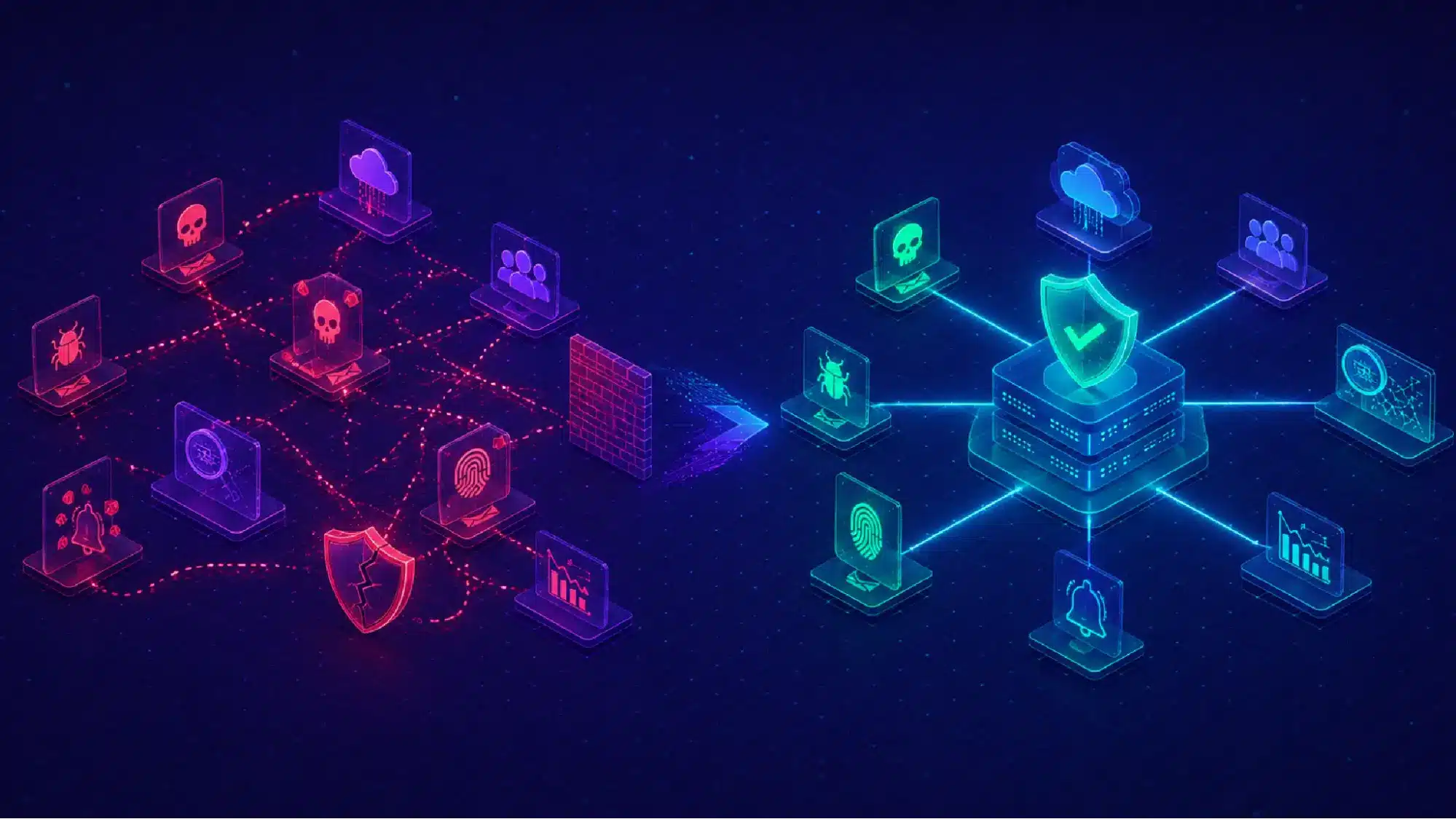
So CREAPLUS made a change. It moved its reseller network onto a single, unified platform instead of a patchwork of point solutions. One dashboard. One AI-driven engine. One place to set policy, monitor activity, and respond to threats, rather than juggling five.
The impact was remarkable. When resellers aren’t spending hours reconciling settings across separate consoles, that time turns into capacity, and capacity turns into growth. CREAPLUS’s resellers have been able to …
✔ Take on meaningfully more customers without adding headcount
✔ Cut the time it takes to investigate a security alert by more than half
✔ Get new customers up and running in a fraction of the time it used to take.
On the cost side, consolidating tools lowered the total price of running a security stack, and CREAPLUS has been able to pass savings on to the businesses its partners serve.
Why a connected system beats a pile of point solutions
Zoom out, and the reason this worked has less to do with any single feature than you’d expect. A platform doesn’t have to win on every individual spec sheet to work better in practice, because security isn’t just about how one tool performs on its own. It’s about whether the whole system works together in real time, catching and stopping things instead of piecing the picture together after the fact.
For a partner supporting dozens of lean IT customers, that kind of consistency across every function matters more than one standout feature bolted onto four disconnected ones. Fewer tools also means fewer places for a real threat to slip through unnoticed, which matters just as much as speed or cost.
Proof it holds up in high-stakes environments
CREAPLUS’s reseller network put the platform to work in one of its most demanding cybersecurity environments. A manufacturer that holds proprietary designs and processes that competitors actively try to access. The company used the same consolidated platform for forensic-level device visibility and ransomware-resistant backups, the kind of capabilities that matter when a single breach could mean losing that proprietary data outright.
Consolidation, CREAPLUS found, also reshaped how a partner sees its own book of business. When every customer workspace runs on the same platform, a partner can actually see across its whole book of business from one place, instead of logging into each customer’s console separately to figure out who needs attention. That’s a meaningful shift for a small team trying to manage risk across dozens of accounts at once. Spotting a gap or an unusual pattern early is a lot easier when you’re not hunting for it console by console.
That’s really the measure of an SMB-friendly platform. Not whether it claims to cover everything, but whether a lean team can actually run it that way. CREAPLUS found one that held up to that test, and its resellers and their customers are seeing the results.
We put together a case study on how CREAPLUS made this shift, including the results its reseller network has seen, the specific use cases its partners built around the platform, and direct commentary from CREAPLUS’s leadership team. If you’re supporting SMB customers through a reseller model of your own, or you’re simply weighing whether it’s time to consolidate your stack, it’s worth a look.
Read the full CREAPLUS case study