You walk into a new client environment and start the audit. Email security from one vendor. Endpoint from another. A cloud tool bolted on after a breach scare two years ago. Maybe a compliance module someone bought because an insurance carrier asked for it.
Six, seven, eight tools. Different dashboards. Different alerts. Different renewal dates.
None of it was designed to work together as a system — and none of it was your call. But when something goes wrong? You’re the one on the phone at 11 p.m.
The stack you inherited
The fragmented security stack didn’t happen because someone made bad decisions. It happened because security was built reactively one incident at a time. A tool was added to solve one problem, then another was layered on top, then another. Over time, the stack became harder to manage than the threats it was meant to stop.
Three tools detected three parts of the same attack. But the system never understood it as a single incident.
For MSPs, this creates a specific kind of exposure. The architecture decisions were made long before you arrived. But the gaps, the missed detections, the post-breach conversation — those land on you.
True, licensing fees across vendors compound fast. But the deeper hit is operational. Every manual handoff, every context switch across consoles … all of it is coordination overhead your team has to carry and capacity not spent on actual protection.
Platform vs. point solutions: An architecture decision
The goal isn’t to manage the stack better. It’s to stop building a practice on top of one.
Most security stacks were designed for dedicated security teams. Most of your clients don’t have one. A fragmented stack demands specialist-level knowledge at every handoff — someone has to know which console holds which context, which vendor to call, how to manually correlate what the tools couldn’t. That’s a real burden being placed on generalist teams, and it makes your delivery model only as strong as whoever happens to be available.
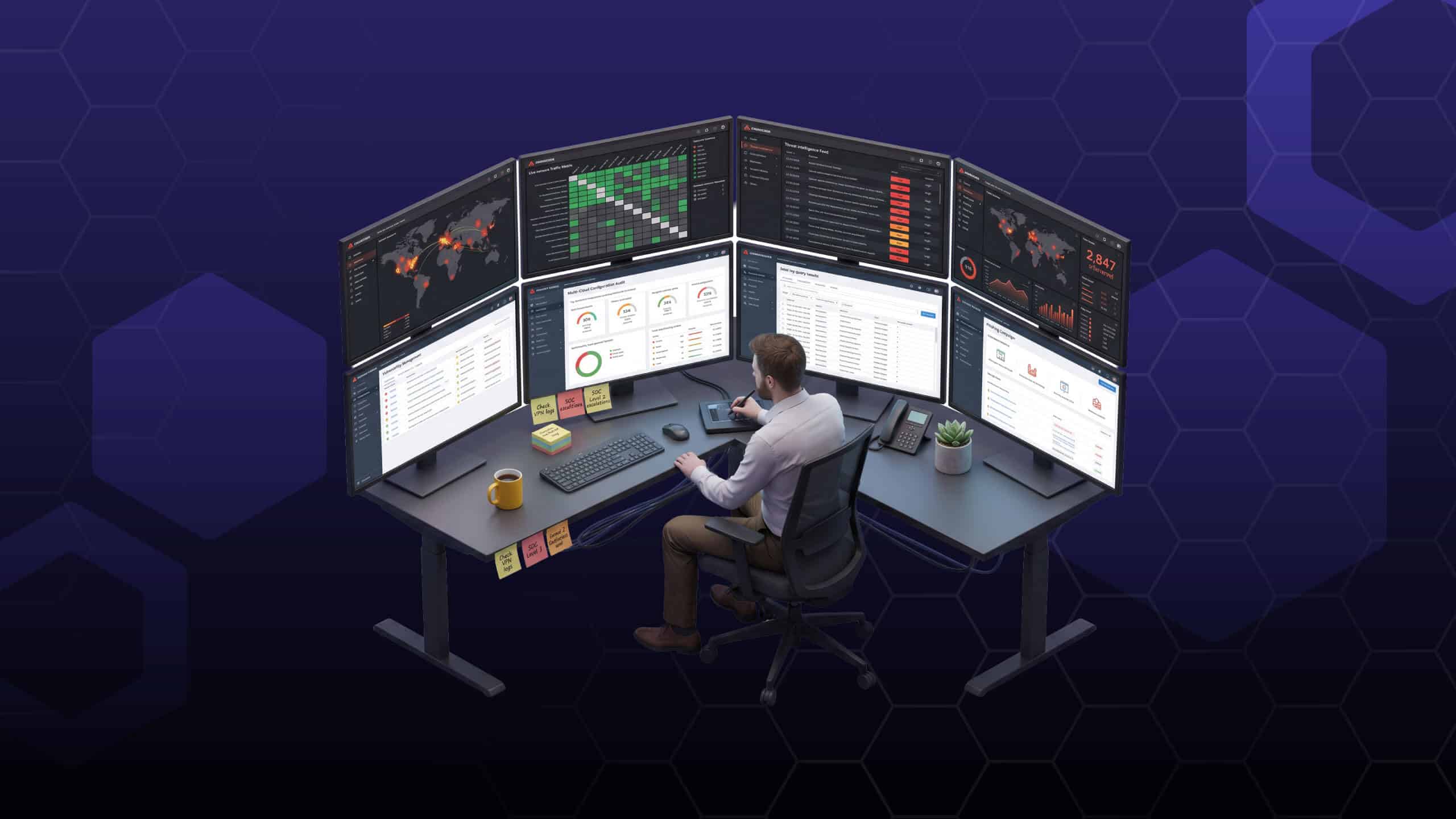
A unified platform changes that equation at the architectural level. When email, endpoint, cloud, data, network, and user activity share a single data model, Coro brings the information together in one platform, allowing analysts to investigate related activity faster without moving between disconnected security tools, instead of treating each step as a separate event. One platform. One experience. One place to investigate security events across your environment. The context gap closes at every transition — not because your team is working harder, but because Coro provides one platform where security teams can manage and investigate activity across their environment through a consistent operating experience.
The platform vs. point solution debate isn’t really about features. What’s at stake is whether your security practice runs on something someone designed or something someone accumulated.
When security runs on systems, not superstars
The fragmented stack doesn’t just demand specialist knowledge to compensate for gaps in an environment — it assumes continuity of that knowledge. Lean IT teams rarely have a dedicated security expert to begin with, and when they do, that person moves on. The configurations stay.
A platform-based model holds its shape regardless of who’s in the room. Workflows are consistent because they’re built into the architecture. New clients onboard into the same system. New technicians ramp up on the same interface. You bring a standard to every engagement instead of adapting to whatever you inherit.
That’s what a consolidation play actually delivers — not just fewer tools, but a repeatable delivery model with predictable outcomes. One pane of glass. One workflow. A practice that scales because the architecture supports it.
Your clients already know they have vulnerabilities. What they’re waiting to see is whether change is worth the risk of disrupting something that kind of works. Show them that the real risk is staying dependent on an architecture that can’t follow an attack as it moves.
The security your clients inherited wasn’t built to protect them. The platform you bring to the table can be.