Your team is not failing at security. You’re making hard calls every day with limited time, budget, and headcount. Here’s how to close the gaps without blowing up your operations.
If you manage IT for a mid-sized business, you already know the feeling. You have antivirus running, MFA on your Microsoft 365 accounts, maybe a firewall with rules that have not been touched in two years. The big attacks you read about in the news, the ransomware hitting hospitals, the supply chain breaches, those happen to other organizations. So far.
This is what security professionals call the ‘good enough’ trap. Not ignorance. Not negligence. Just the daily reality of running IT with a lean team, where every decision involves a tradeoff between protection, productivity, and operational disruption.
The problem is that ‘good enough’ worked better five years ago. Threat actors have automated their attacks. Dwell times have dropped. The window between a vulnerability being discovered and it being actively exploited is shrinking. What felt like acceptable risk last year may be a genuine exposure today.
The good news: closing those gaps does not require replacing your entire security stack, hiring a team of analysts, or migrating everything to a new platform overnight.
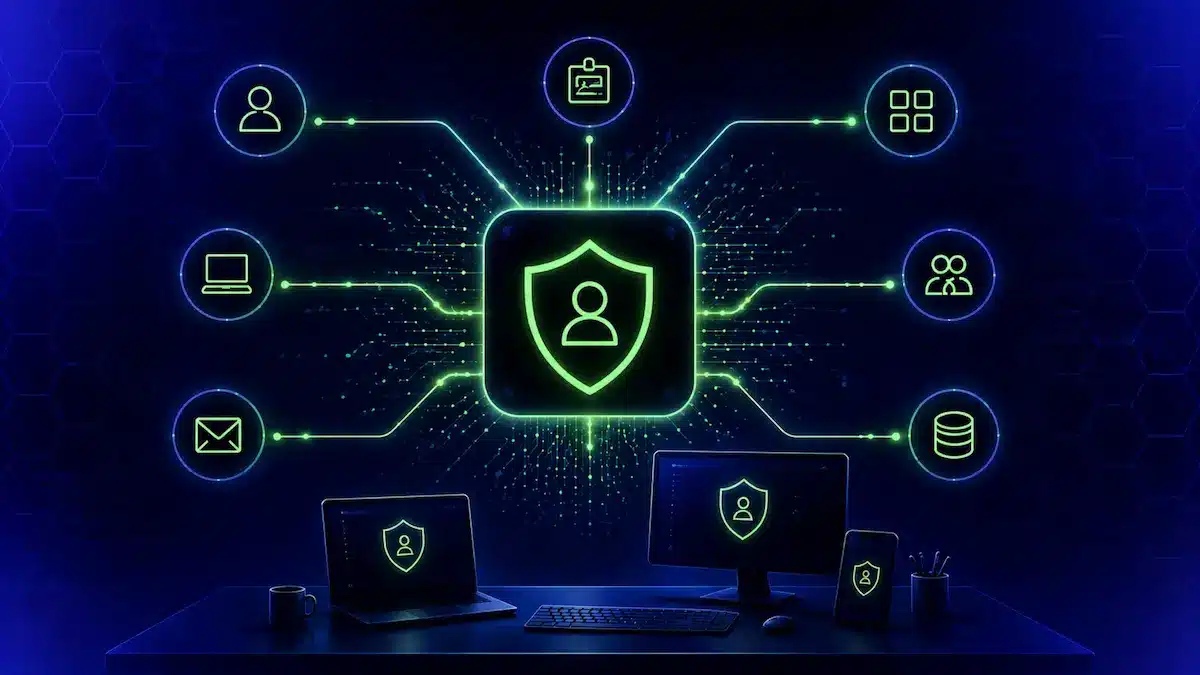
It requires closing the gaps you already have, which is the idea behind workspace security: an approach that unifies endpoint, email, identity, and data protection into one system instead of stitching together point solutions one gap at a time.
The Tradeoffs Lean IT Teams Make Every Day
Security decisions rarely happen in a vacuum. They compete with everything else on your plate.
Take patching, one of the most foundational security actions an IT team can take. Unpatched systems are a leading attack vector. Most IT professionals know this. And yet patching still gets delayed in organizations of every size. Why?
- Patches break things. That application your finance team cannot live without? It stopped working after the last Windows update.
- Patching requires downtime. Users complain. Managers ask questions.
- The risk of delaying a patch feels abstract. The disruption of applying it feels immediate.
When you delay a patch, you’re making a calculated bet: that the disruption of applying it is worse than the risk of leaving the vulnerability open. For a long time, that bet usually paid off. It’s paying off less and less.
The same dynamic plays out across nearly every security domain. Email filtering that might block a legitimate vendor invoice. Endpoint controls that slow down devices. Network monitoring that generates thousands of alerts no one has time to review. Every protection mechanism introduces friction, and lean IT teams are constantly managing that friction against a backlog of other priorities.
The result is a security posture that looks reasonable from the outside but has quiet gaps underneath, partial coverage, manual workarounds, and growing dependence on things not going wrong.
What ‘Partial Coverage’ Actually Looks Like
Most lean IT teams are not unprotected. They have layers. But those layers were often added at different times, by different people, to solve different problems. Over time, the architecture looks something like this:
- Endpoint protection on managed devices, but not on contractor laptops or personal devices used for work
- Email security that catches obvious phishing, but misses sophisticated business email compromise
- Cloud app access with MFA, but no visibility into what data is being shared from those apps
- A firewall protecting the perimeter that no longer has a perimeter
- Incident response that depends on one or two people who also handle the help desk
It’s a pattern industry research recognizes, too: lean IT teams often manage 40 or more separate security tools, and the resulting alert volume is so high that only a small fraction of alerts turn out to be genuine threats, burying the handful of signals that matter. None of this is unusual. It’s the natural state of security in organizations without dedicated security operations teams. The gap is coverage. And the challenge is that each gap requires a different tool, a different vendor, a different contract, and more operational overhead to manage.
At a certain point, adding more point solutions doesn’t make the organization more secure. It makes it more complex. And complexity is the enemy of lean IT. Gartner frames this shift directly: “The endpoint protection market is converging with other point offerings to address the needs of resource-constrained infrastructure security teams.”
The Case Against Rip-and-Replace
If you have been in IT long enough, you’ve seen what happens when leadership decides to overhaul the security stack. A new platform is selected. Migration timelines are optimistic. The old tools get turned off before the new ones are fully configured. Something breaks. Months later, you’re still cleaning up.
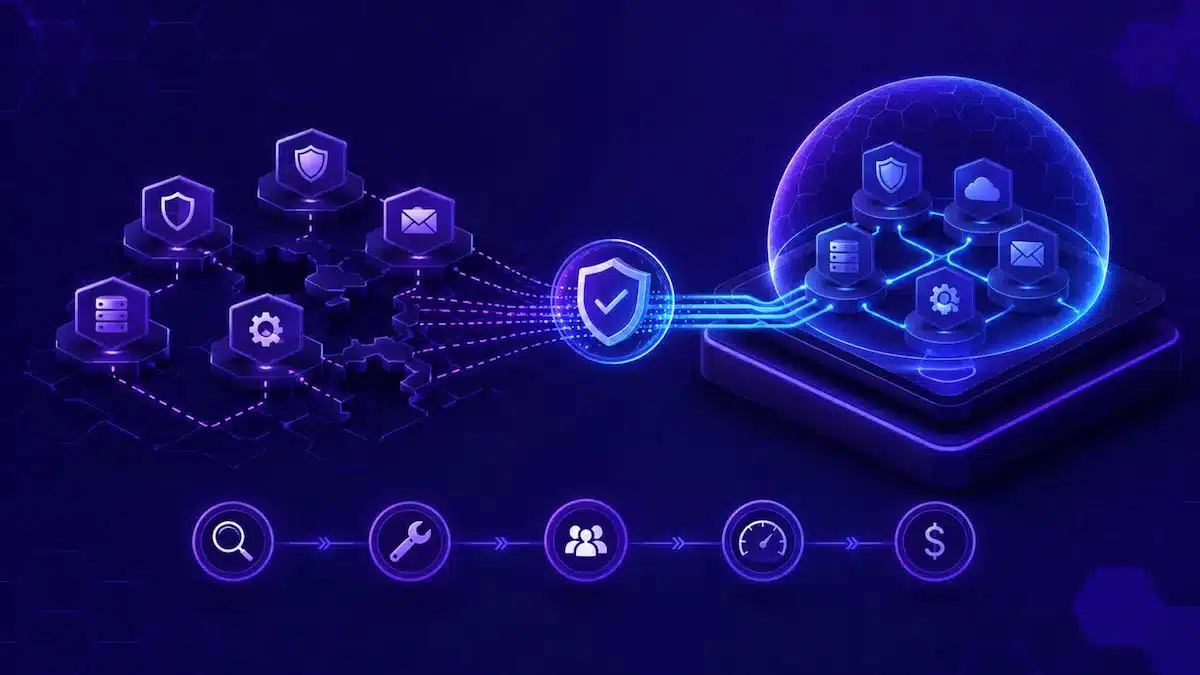
This is why the instinct to stay with what you know isn’t irrational. It reflects hard-won experience with the cost of disruption. But it also explains why partial coverage persists: the cure sometimes feels worse than the disease. Analyst research backs this up: wholesale rip-and-replace migrations tend to fail specifically for resource-constrained teams, precisely because of this risk-and-disruption tradeoff, and the more effective path is consolidation, not replacement.
The better question isn’t ‘how do we replace everything?’, it’s ‘how do we close our most important gaps without creating more complexity?’
Keep the tools you need to keep. Close the gaps without multiplying the overhead. That is a security strategy a lean IT team can actually execute.
What a Realistic Path Forward Looks Like
For most lean IT teams, meaningful security improvement starts with a clear picture of where coverage ends.
Identify your coverage gaps, not your tool count. How many tools you have matters less than which attack surfaces each one actually protects. Email, endpoints, cloud applications, data, and network access each represent a distinct risk surface. Map your tools against those surfaces and look for the seams.
Prioritize by impact (not effort). Not all gaps carry equal risk. A misconfigured cloud storage bucket with sensitive data is a different risk level than an unmonitored endpoint used only for video calls. Risk-based prioritization helps lean teams focus limited resources where they will have the most effect.
Reduce the number of places you need to look. Alert fatigue is real. When detections come from five different consoles, critical signals get lost in noise. Consolidating visibility, not necessarily tools, is one of the highest-leverage improvements a lean team can make. Industry research suggests every additional tool in the stack adds real administrative overhead, so even modest consolidation can free up meaningful capacity.
Build confidence in your posture before adding complexity. Strong security confidence doesn’t come from having more tools. It comes from knowing that your critical surfaces are covered, your team can act on what they see, and your operations can keep running when something does happen.
In practice, this works best as a phased effort rather than a single project: an initial phase to audit coverage and knock out quick wins, a middle phase to integrate and centralize visibility, and a later phase to automate and optimize what you’ve consolidated. Spread over a year or so, that pace matches how much change a lean team can actually absorb at once.
How Coro Supports the Lean IT Reality
Coro was built specifically for organizations that can’t afford to staff a security operations center but also can’t afford to leave coverage gaps unaddressed. The platform consolidates protection across the attack surfaces that matter most to mid-sized businesses, email, endpoints, cloud applications, users, and network access, into a single console designed for teams without dedicated security analysts. Gartner has observed this pattern across the market: “WCPs address this by preintegrating modules to lower costs, reduce errors, and improve cybersecurity posture.”
The point isn’t to replace everything you have on day one. If you have an endpoint protection tool that’s working, keep it. If your email security is solid, keep it. Coro is designed to fill in where you have gaps, reduce the number of tools you need to actively manage, and give your team clearer visibility into what’s happening across the environment. It also takes on a lot of the manual triage itself: AI-driven detection helps separate real signals from noise automatically, so your team spends less time sorting alerts and more time acting on the ones that matter.
Specifically for MSPs managing multiple client environments, this translates into fewer consoles to monitor, more consistent coverage across clients, and the ability to demonstrate security posture improvements without requiring customers to absorb the cost and disruption of a full stack migration.
Complete security coverage should not require enterprise-level resources. Lean IT teams deserve a realistic path, not a perfect one.
The Shift Worth Making
The goal isn’t a perfect security stack. It never was. The goal is meaningful improvement in coverage without meaningful increases in operational burden. For lean IT teams, that means being honest about where ‘good enough’ ends, understanding what the real exposure looks like, and finding solutions that close gaps without creating new ones.
Security is never fully solved. But the distance between ‘good enough’ and ‘fully covered’ is shorter than most teams think, if the path is realistic, the tools are designed for lean operations, and the approach doesn’t require blowing up what already works.
Ready to See Where Your Coverage Ends?
Coro offers a no-pressure assessment to help organizations map their current coverage against the attack surfaces that matter most. No commitment, no stack replacement required, just a clearer picture of where you stand.
Schedule a security coverage review >
Sources: Gartner, “Market Overview for Workspace Cybersecurity Platforms,” Evgeny Mirolyubov and Peter Firstbrook, 20 July 2026 (ID G00836743).