It’s a hard truth: some security deals just stop moving forward. They’re not lost, they just get stuck.
Let’s replay the facts: you’ve had the discovery call, and the business knows they have gaps. And yet, the deal isn’t moving.
What actually might be happening isn’t a lack of budget nor a lack of urgency. It might just be a lack of clarity. The client can’t connect the tools they’re evaluating to the risks they’re carrying — or to any outcome they can confidently justify.
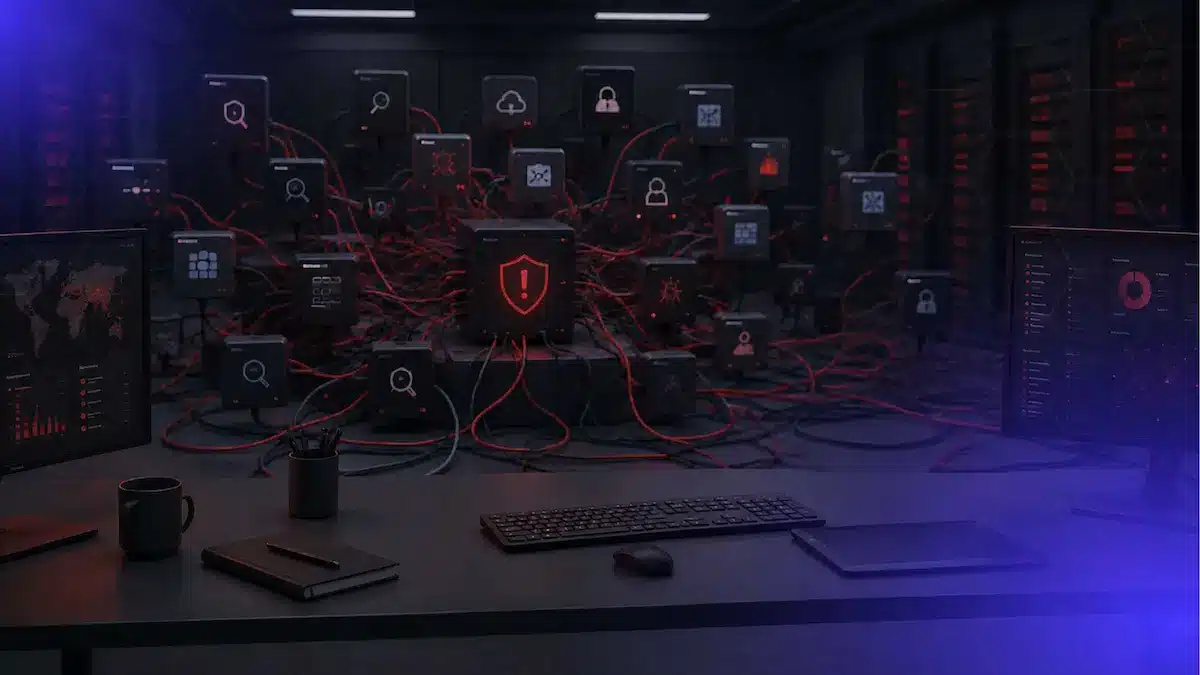
Most clients assume that if their tools are connected, their security is unified. The reality is those are two very different things.
The symptoms are usually recognizable: endless tool comparisons, “we’ll revisit next quarter,” or budget hesitation despite visible risk. To get the deal moving, you have to look beyond the symptoms to diagnose the underlying causes of the stall.
Here are four of the most common reasons:
1. Tool comparison paralysis
Your customer is evaluating things like endpoint, email security, data or cloud protection as separate decisions. There’s no shared framework, so every tool gets judged on features instead of how it contributes to the overall environment.
- Tools are compared across different categories with no common baseline
- Each solution looks viable on its own
- There’s no clear way to evaluate how everything works together
In many environments, tools are connected, but not necessarily coordinated. That makes it difficult for customers to determine what “good” looks like across the system as a whole.
When that happens, evaluation becomes open-ended. There’s always another comparison to make.
When tools operate in silos, customers see a feature list, not a security posture. The evaluation never ends because there’s no finish line.
2. No clear incident narrative
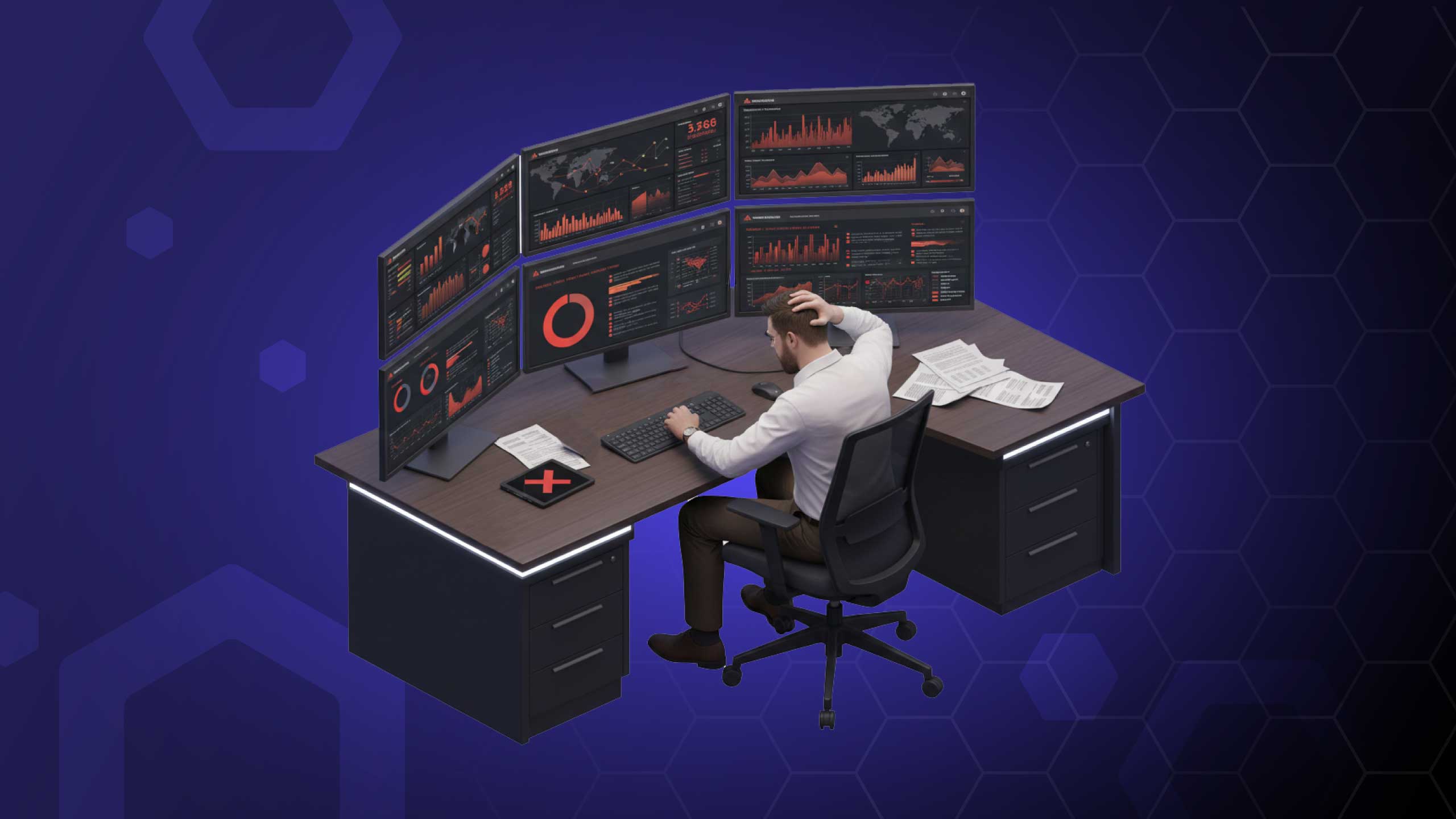
Your client can recognize individual threats: a phishing email, an endpoint alert. What’s harder to see is how those signals relate to each other as a single breach.
- Events appear as separate incidents rather than a sequence
- Correlation across email, endpoint, and cloud is limited
- Risk remains abstract, even when exposure is real
In environments where tools operate independently, each one provides part of the picture. Reconstructing the full story often requires manual effort, which slows down both understanding and decision-making.
Until your customer can visualize an attack unfolding across their environment, the threat stays theoretical. Abstract risk doesn’t move budgets.
3. Integration anxiety
This concern doesn’t always come up directly, but it’s almost always there:
“How will this fit into what we already have?”
“What will this add to our workload?”
- Integration often requires ongoing configuration and oversight
- Responsibility for connecting tools falls on the internal team
- Lean IT environments have limited capacity to manage that complexity
Over time, this creates a subtle dependency on the people maintaining the environment. How systems are configured, how alerts are interpreted, and how issues are resolved.
As teams change, that knowledge doesn’t always transfer cleanly. Small gaps can accumulate, even in well-managed environments.
For customers already operating at capacity, adding another tool can feel less like progress and more like additional overhead.
4. The cost conversation is incomplete
When deals stall at the budget stage, it’s rarely just about price.
- Customers are focused on the cost of a new solution
- The operational cost of the current environment is harder to quantify
- Redundant tools, manual effort, and missed signals aren’t always visible in the evaluation
In fragmented environments, cost is distributed across tools, time, and effort. Without a clear way to measure that, “wait and see” often feels like the safer choice.
How to unstick the deal
Lead with the incident story
Walk your client through a single attack path across their environment. Show how signals appear across systems, and where context is lost along the way.
This helps shift the conversation from individual tools to overall visibility.
Diagnose before you pitch
Use simple questions to make the current state more concrete:
- How many security tools are you actively managing?
- How many alert queues does your team monitor?
- How many systems are involved in investigating a single incident?
These answers often highlight complexity in a way that resonates more than feature comparisons.
Reframe ROI around operations
Move the conversation beyond tool cost.
Focus on:
- Time spent managing and correlating alerts
- Effort required to maintain integrations
- Risk that comes from gaps between systems
When those factors are visible, the evaluation shifts from price to overall operating model.
Sell operational relief, not features
For many lean IT customers, the goal isn’t adding capability—it’s reducing friction.
Less context-switching.
Less manual coordination.
More consistency in how issues are handled.
Position the solution in terms of how it supports the team’s ability to manage security day to day, not just what it adds technically.
From stuck to decision
Security customers aren’t short on options. They’re trying to make sense of how those options fit together.
The partners who help clarify that — who can connect tools, risk, and operations into a coherent picture — are the ones who move deals forward.
When the path becomes clearer, decisions tend to follow.